
My Life as a Rat
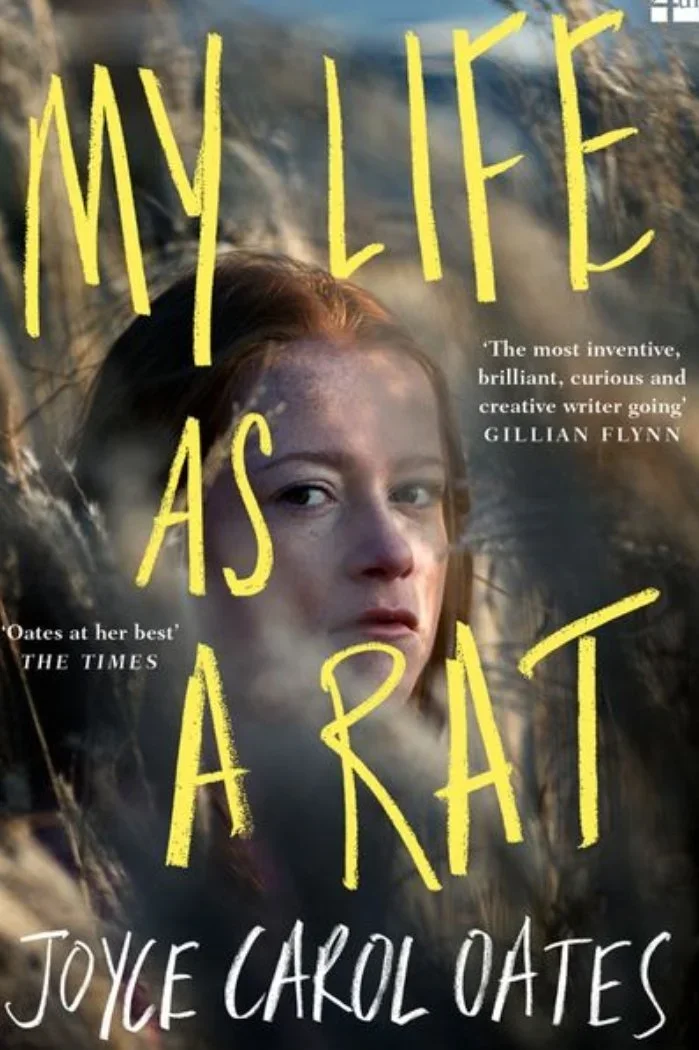
My Life as a Rat is a devastatingly honest dive into family, loyalty and survival. Joyce Carol Oates captures the heartbreak of truth through Violet Rue Kerrigan, a young girl disowned for revealing her brothers’ violent secret.
Every page is heart-wrenching, yet impossible to put down.
Reading My Life as a Rat is like sitting across from Joyce Carol Oates herself, as she pragmatically—yet dramatically—dictates the story of Violet Rue Kerrigan. Her voice is neutral, almost conversational, but every word lands with the weight of lived experience. You are aware of her control over the narrative, yet she allows you to inhabit Violet’s world fully—raw, unflinching, and heartbreakingly real.
The novel exposes the cruel contradictions of life and survival. Oates writes, “This is the greatest weakness, wanting to be liked, loved. You give up all pride wanting to be liked, loved,” capturing the way human longing can both define and torment us. Moments of reflection punctuate the story, as in “Sometimes where there are no words, that is best,” reminding us that silence can hold as much power as speech.
Oates’ prose is sharp and piercing when she confronts power and oppression: “You realize: the man's power over you is to intimidate you, to make you ashamed. But your power over him is the power of laughter.” And her observations of life’s practical absurdities are unflinchingly honest: “What you lose in dignity you gain in tips—or what you gain in tips you lose in dignity.”
Her style is a study in contrasts—detached yet intimate, pragmatic yet laden with drama. You cannot help but be drawn into Violet’s world, feeling both the weight of her suffering and the startling moments of resilience and dark humor. Oates’ mastery lies in presenting the unvarnished truth without judgment, leaving the reader to wrestle with it, to inhabit it, to feel it.
My Life as a Rat is heart-wrenching, unrelenting, and utterly unputdownable. Every page reminds you that survival is never neat, dignity is always negotiable, and laughter is, sometimes, the most radical act of all.
Bitter-Sweet Survival Tart
Serves: one truth-teller
Time: as long as it takes to face your own contradictions
Ingredients
1 pre-baked tart shell (sturdy, reliable—like denial at first glance)
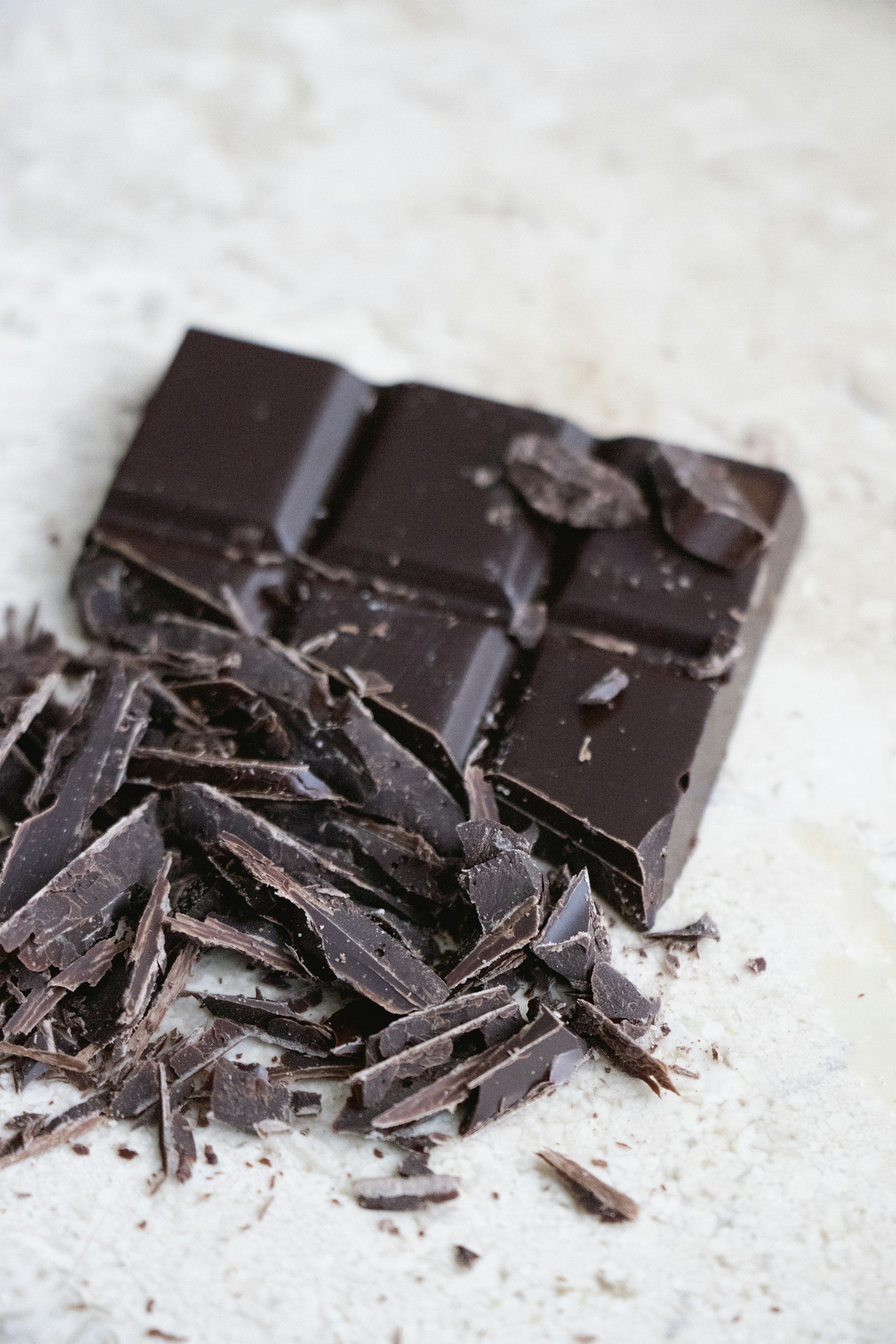
½ cup dark chocolate (bitter, honest, no sugar-coating)
¼ cup heavy cream (softens the blow, just a little)
1 teaspoon espresso or strong coffee (the sting of reality)
1 teaspoon sea salt (because dignity is negotiable)
1 teaspoon honey or caramel (small acts of sweetness, fleeting but radical)
A few crushed candied nuts or dried fruit (the unexpected crunch of life)
Optional: a pinch of chili (for moments that bite)
Instructions
Melt the chocolate with the cream and espresso in a small pan. Stir slowly, deliberately. Let the aroma hit you—rich, sharp, unavoidable.
Add the salt—just enough to make the sweetness feel dangerous, like survival with stakes.
Pour the ganache into the tart shell. Smooth it over, but don’t obsess. Imperfection is part of the truth.
Drizzle honey in thin, uneven lines. A small defiance against the darkness, a reminder that sweetness exists, even if fleeting.
Scatter nuts or dried fruit on top. They are the little surprises life throws at you—sometimes bitter, sometimes sweet.
Optional twist: a tiny pinch of chili. Just enough to make the tongue pause, to make you think, to remind you that even pleasure can sting.
Chill for at least one hour, or as long as you can wait without sneaking a bite.
Serving Notes
Eat slowly. Taste the bitterness first, the sweetness after, the sting in the back of your throat. Let the contradictions linger—like Violet’s world, like survival, like life itself.
This isn’t just dessert. This is a bite of truth.