
The Room To Be Brave
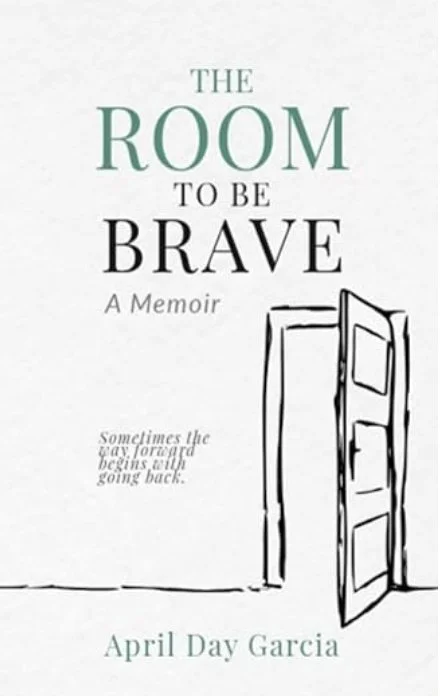
From the very first pages of The Room to Be Brave, I knew I was already inside the story.
In the prologue, April writes, It is impossible to tell my story without brushing up against other people’s wounds.
That line reveals the delicate tension of memoir writing, of speaking your truth while knowing it overlaps with someone else’s pain.
Another line stayed with me long after closing the book, I tell this story from the middle of the mess.
It reminded me that there is no perfect timing for reflection or healing. We don’t write once life is resolved; we write while we are still living it.
April’s storytelling moves us through literal and emotional rooms, each space revealing another layer of memory, grief, growth and resilience. Her memoir unfolds like wandering through a house of the past, not chronologically, but intuitively. Just as healing rarely follows a straight line, the story circles back, revisits and reclaims.
You will laugh. You will cry. And somewhere in her words, you will recognize yourself.
The metaphor of walking through rooms as a way of healing the past is so very brilliant. The narrative doesn’t rely on a conventional timeline instead, it mirrors how memory actually works, returning to what still asks to be understood.
Her reflections on love are especially tender. She writes about finally allowing connection after years of survival, Because I finally stopped trying to outrun myself long enough to let someone catch me.
Love, for her, becomes healing not because it fixes the past, but because it stays, something she once believed impossible.
One piece of advice struck me deeply,
That’s how I learned to steady myself — not by pretending I wasn’t afraid, but by staying present.
The Room to Be Brave is a book for anyone searching for a place to feel seen, understood and encouraged. It reminds us that joy isn’t somewhere else waiting for us, it exists in the rooms we already inhabit, if we are willing to truly look.
This is a memoir for readers who need softness without avoidance, honesty without perfection and the quiet reassurance that healing can begin exactly where you are.

A Recipe for Presence
To accompany your reading of The Room to Be Brave
Some books ask you to rush.
This one asks you to stay.
Make something warm before you begin reading — something simple enough that your hands can work while your thoughts wander.
Honey Orange Rosemary Tea Cake
A cake meant for slow afternoons, open windows, and pages turned gently.
Ingredients
1 ½ cups flour
1 tsp baking powder
½ tsp salt
2 eggs
½ cup olive oil
¾ cup honey
Zest of 1 orange
½ cup fresh orange juice
½ cup plain yogurt
1 tsp vanilla extract
1 tbsp finely chopped fresh rosemary
Instructions
Preheat oven to 350°F. Grease a small loaf pan.
In one bowl, whisk together flour, baking powder, and salt.
In another bowl, whisk eggs, olive oil, honey, yogurt, orange juice, zest, and vanilla until smooth.
Fold dry ingredients into the wet mixture slowly.
Stir in rosemary.
Pour into pan and bake 40–45 minutes, until golden and fragrant.
Let cool slightly before slicing.
To Serve
Slice while still warm.
Pour tea or coffee.
Sit somewhere comfortable.
Read a chapter.
Pause when a sentence stays with you.
Look up.
Breathe.
This is not just baking.
It is practicing presence — the same quiet courage April writes about: staying with the moment instead of rushing past it.